As early as the 1960s, Walter Pichler gained international recognition with his Prototypes, a series of futuristic works comprising technical body applications, pneumatic spaces, and audiovisual components. Particularly interested in architecture, he developed utopian spaces, often in collaboration with Hans Hollein and Raimund Abraham. They favoured synthetic materials that felt radically new at the time, such as PVC, acrylic glass, polyester, and aluminium. Already during this early phase of his career, Pichler had a solo exhibition at the Museum of Modern Art in New York in 1967.
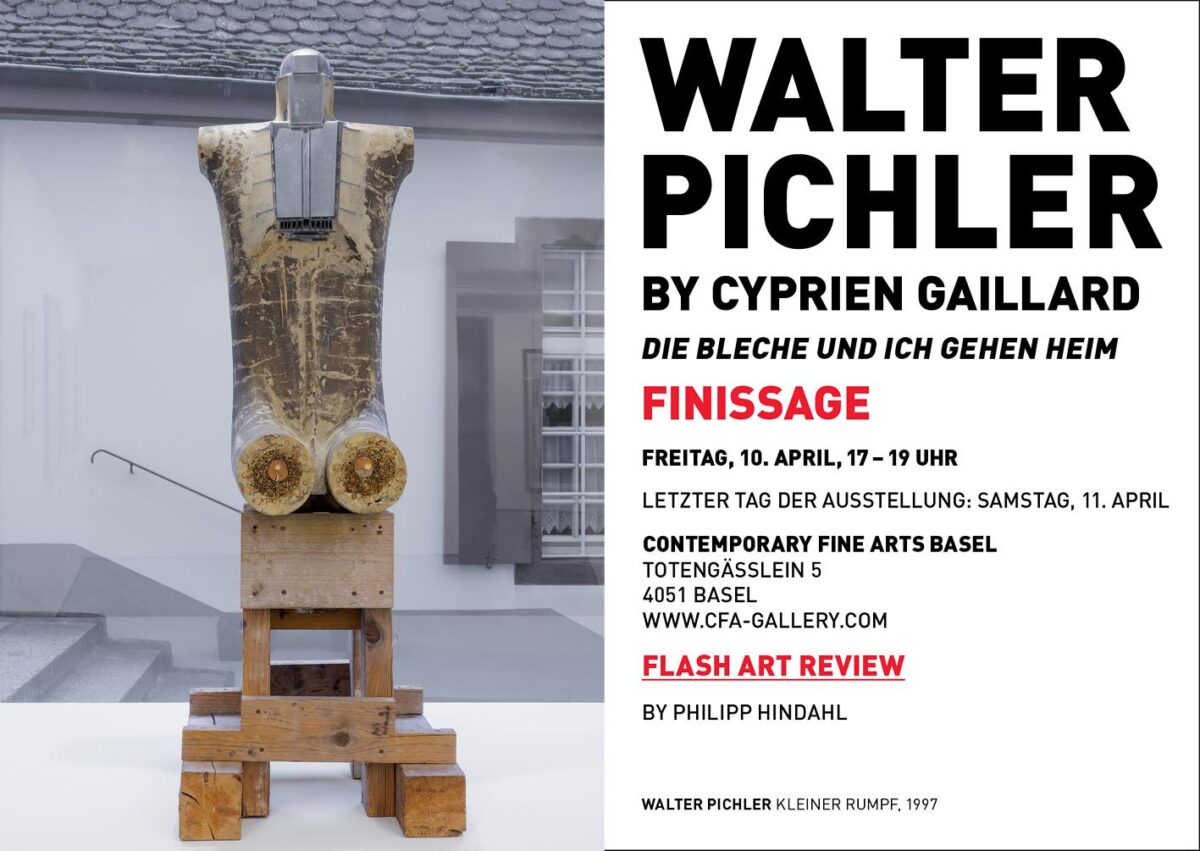
Initially planned only as a temporary stay, Pichler withdrew to Burgenland shortly after another museum solo exhibition in 1971 at Vienna’s Belvedere, today the 21er Haus. He discovered a farmstead in the village of St. Martin, which he purchased and which subsequently became his principal place of work and, alongside Vienna, the center of his family‘s life. The move back to the countryside, as Pichler had grown up in rural Tyrol, also brought about a radical shift in his choice of materials. From then on, he turned to organic materials such as wood, concrete, brick, clay, glass, and lead, gradually creating a unique universe of models, sculptures, and drawings. Drawing was Pichler’s preferred medium, as it served as a projection surface for his imagination. However, he did not carry out his artistic work solely on paper or in model form; he frequently realized his ideas working on them over periods of years, sometimes decades. With rigor, precision, and a strong spatial sense, Pichler approached the realization of his sculptural vision, creating idiosyncratic, archetypal sculptures of an almost archaic beauty.
His most radical move, surely without precedent in modern art history, was his decision to build structures to house his sculptures. These simple buildings on the farmstead served and continue to serve exclusively to accommodate the sculptures. Pichler no longer distinguished between space and sculpture; they can only be understood as a unity. In terms of construction methods and materials, the houses blend seamlessly into the architectural landscape of this rural region on the border with Slovenia and Hungary.
Walter Pichler was born on October 1, 1936, in Deutschnofen, South Tyrol. He lived and worked in Vienna and St. Martin an der Raab. He studied at the School of Applied Arts in Innsbruck and at the University of Applied Arts in Vienna. His work was exhibited at an early stage in renowned international museums and institutions, including the Museum of Modern Art in New York in 1967 and 1975, documenta 4 in Kassel in 1968, the Austrian Pavilion at the 40th Venice Biennale in 1982, the Städel Museum in Frankfurt am Main in 1978, the MAK – Museum of Applied Arts in Vienna in 1988 and 2011, the Generali Foundation in Vienna in 1998, the Stedelijk Museum in Amsterdam in 1998, the Museum der Moderne in Salzburg in 2016, the Belvedere in Vienna in 2023, and the Kunstmuseen Krefeld in 2024. Pichler died in 2012 in St. Martin an der Raab.