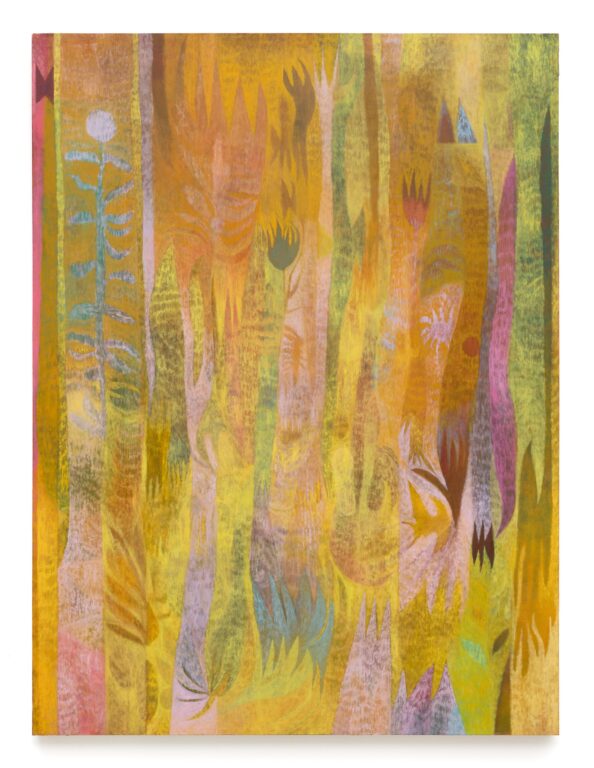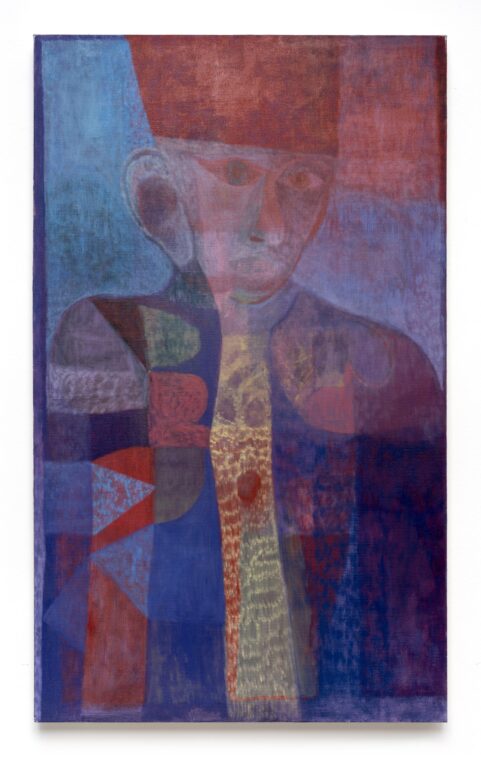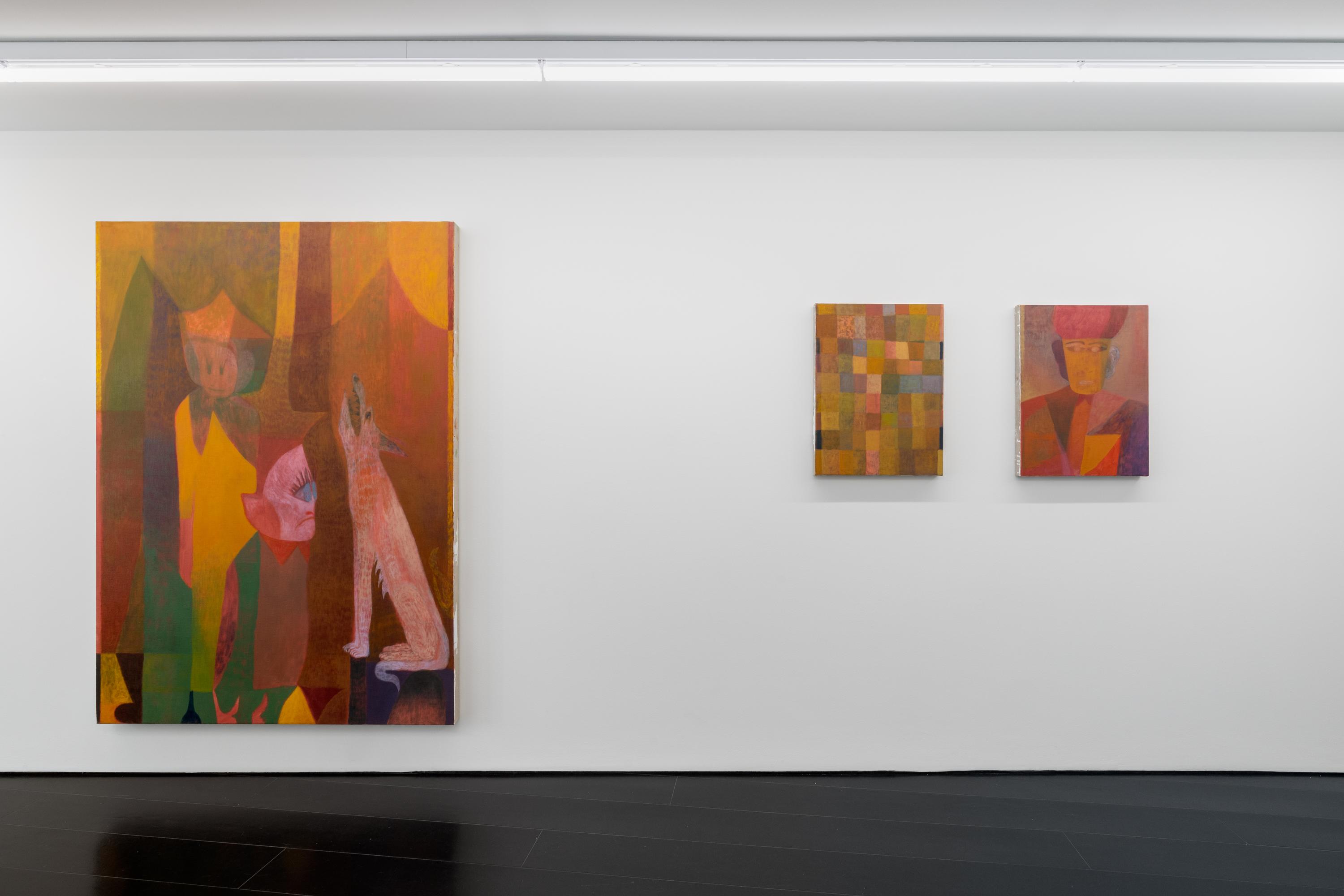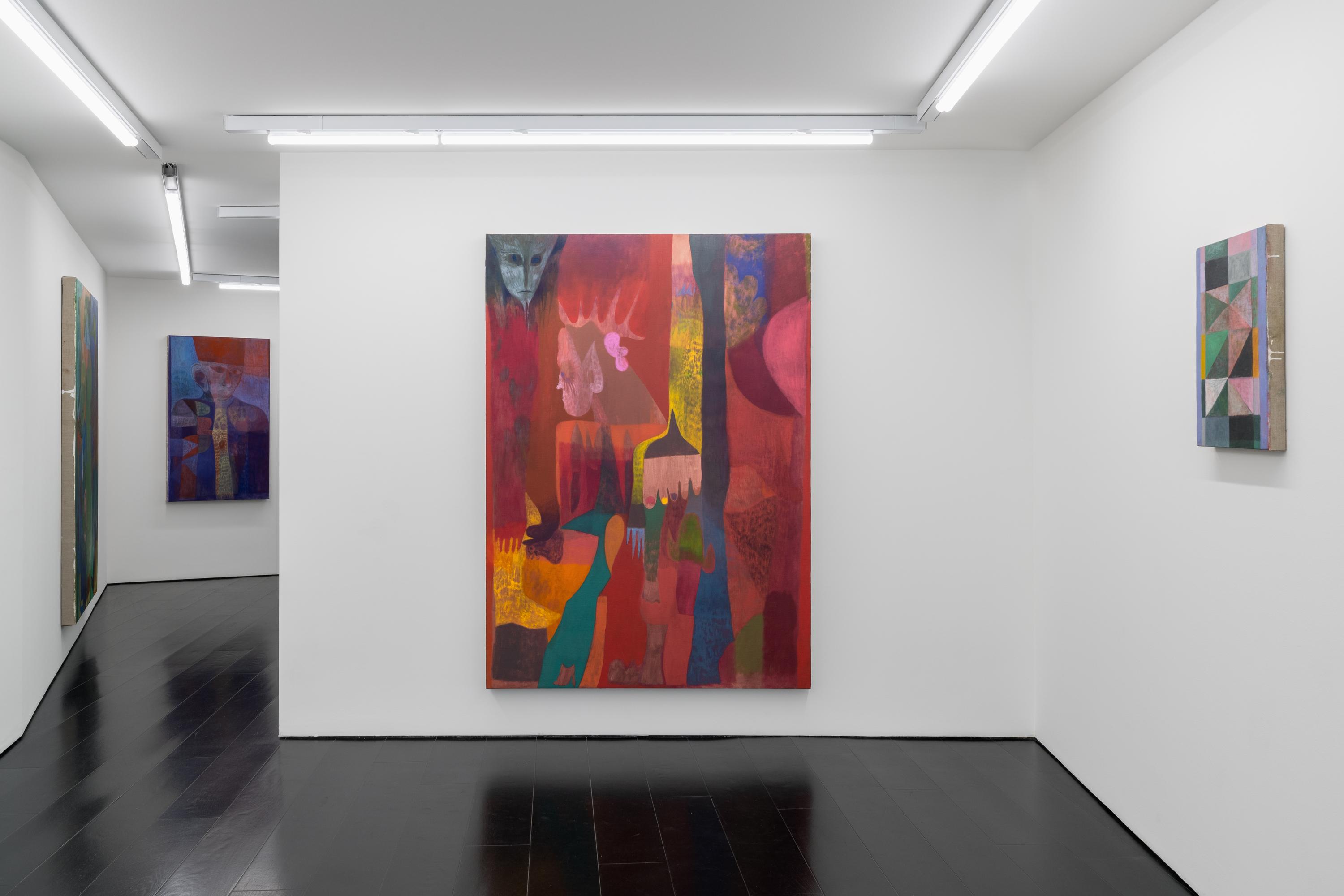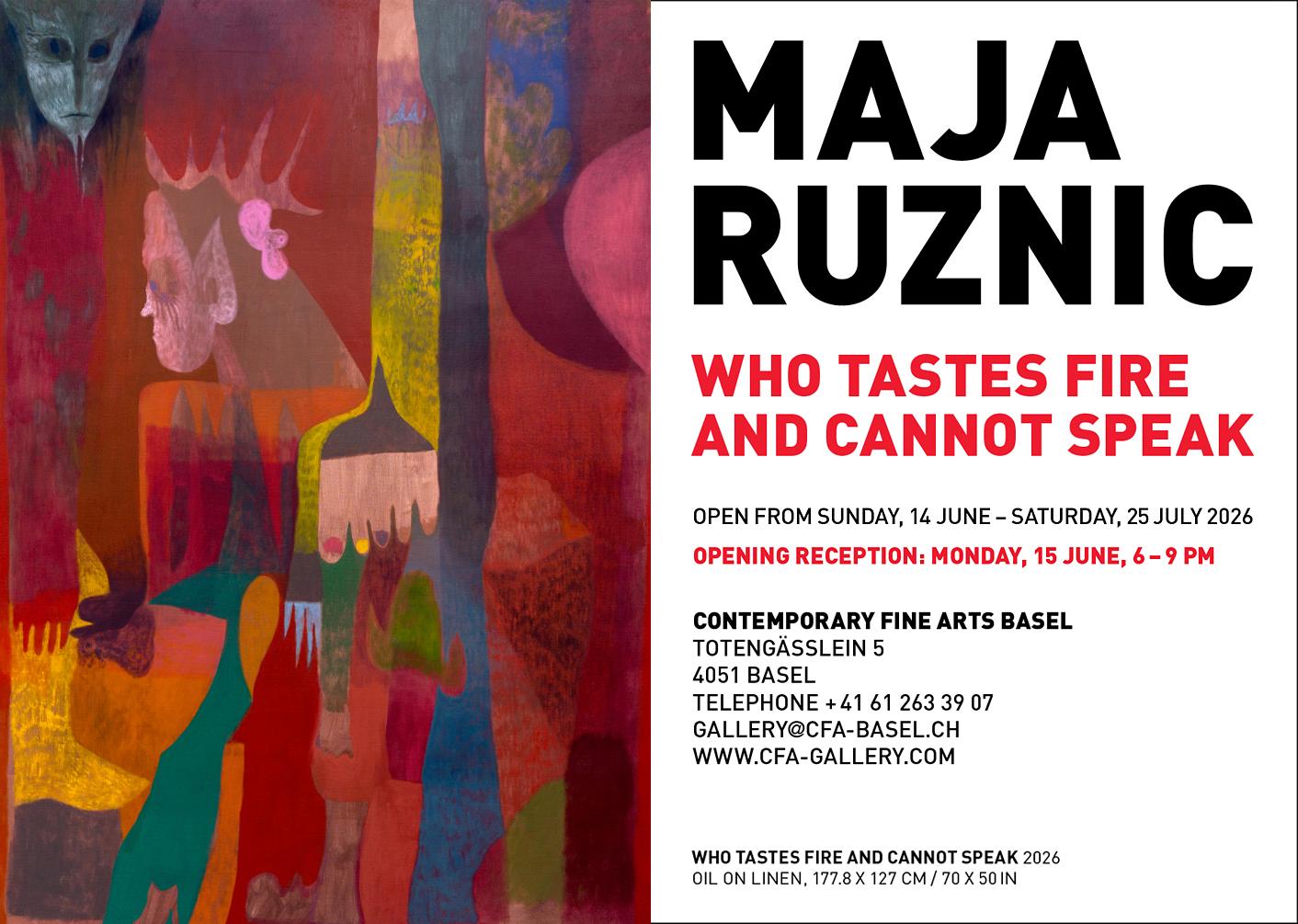
Contemporary Fine Arts is pleased to present Who Tastes Fire and Cannot Speak, the first solo exhibition of Bosnia and Herzegovina-born, New Mexico-based artist Maja Ruznic at the Basel gallery.
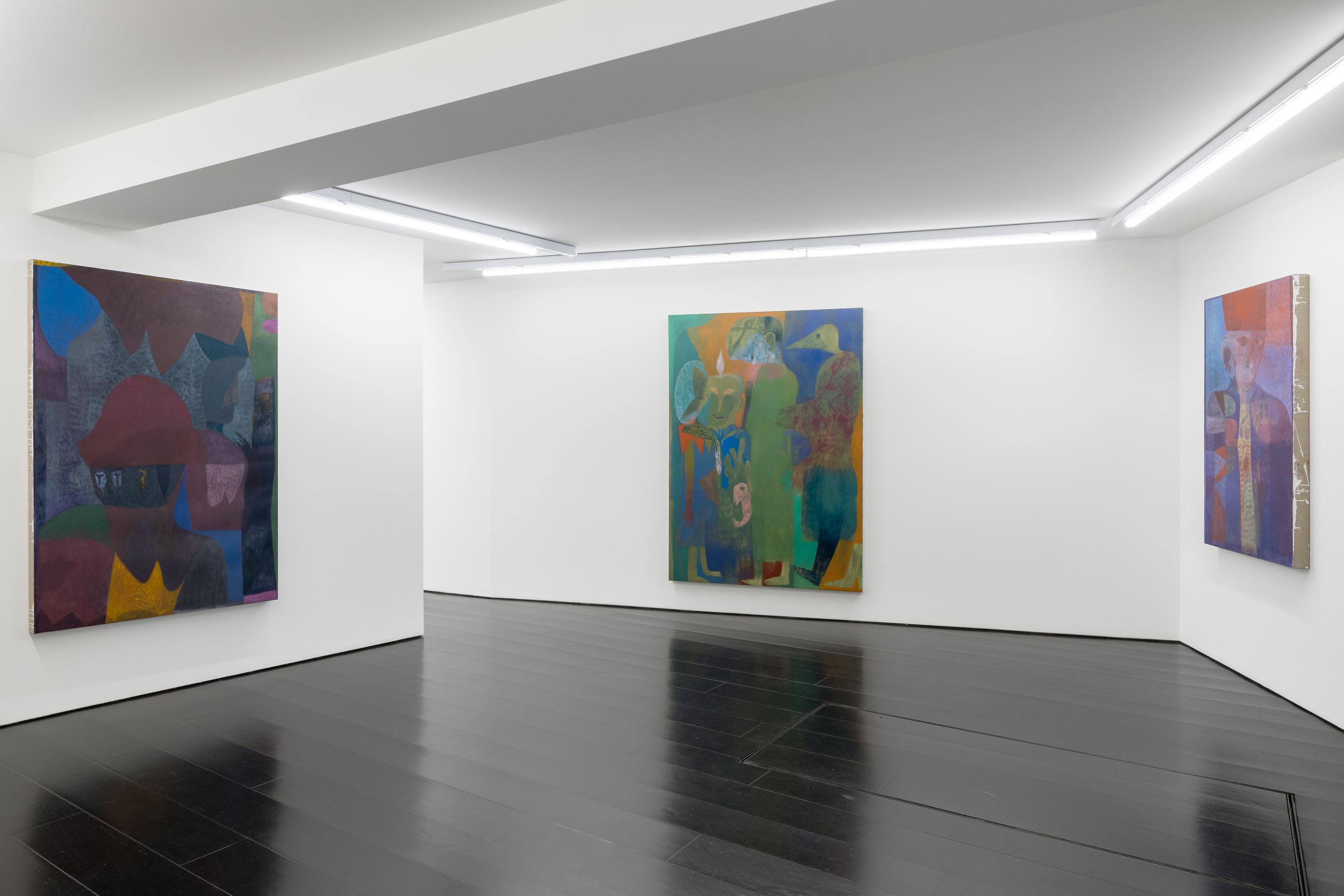
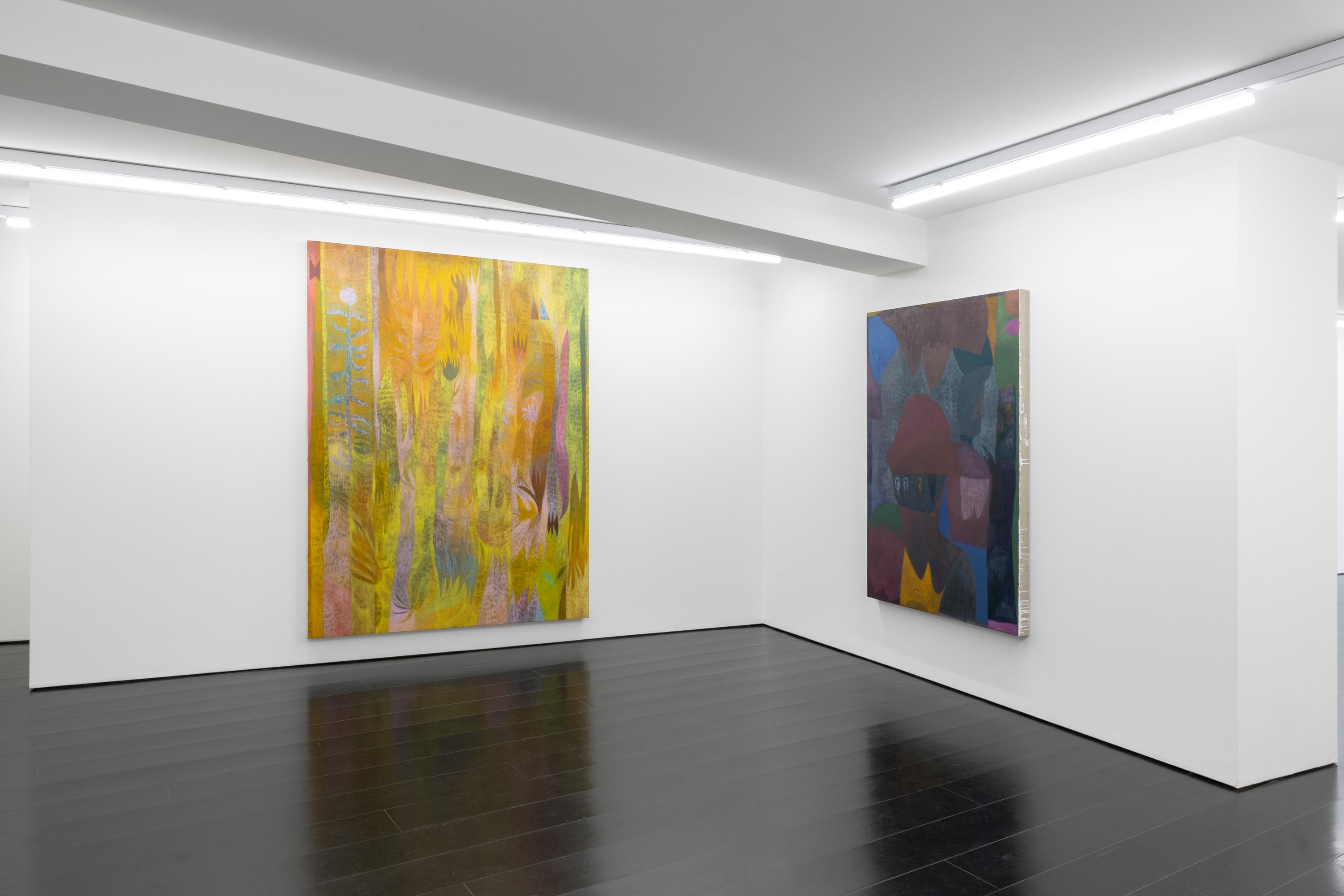
Made especially for this presentation, Ruznic’s new oil paintings move between figuration and abstraction without treating either mode as stable ground. Contours blur as if softened by mist. A head may take the shape of a receptacle. A room can resemble an organ. A silhouette seems to fade into pigment before it can fully declare itself. Rather than starting from a predetermined concept, the artist allows each canvas to develop through process. Her readings and surroundings enter the studio over time, giving each work a deliberate yet unsettled tension.
The title comes from Louise Glück’s poem Day Without Night. Ruznic was drawn to the poem’s inversion of hell. Instead of darkness and flame, Glück depicts a world held in relentless light, where exposure turns into torment. For the artist, this reversal opened a way to think about the need for shadow. In these works, peace does not belong to clarity alone. It is found in obscurity, in moonlit zones where thought is not yet verbal and feeling has not hardened into certainty.
Over the last months, Ruznic has returned to active imagination, a practice associated with Jungian analysis, and to Edward Edinger’s 1985 book Anatomy of the Psyche: Alchemical Symbolism in Psychotherapy. Edinger describes alchemy as the “anatomy of the psyche,” linking the search for the philosopher’s stone to psychological transformation. For Ruznic, this framework makes painting a site of change. The canvas behaves as an alchemical vessel where raw impulses are recast, while the painted surface records the reaction.
The show unfolds within this mercurial logic. Night and the moon are set against daylight and consciousness, but the opposition never settles into a simple division. The subconscious presses on both sides. Images calcine and dissolve. They thicken, rise, darken, then join again. These movements echo Edinger’s seven stages (calcinatio, solutio, coagulatio, sublimatio, mortificatio, separatio, and coniunctio), yet Ruznic does not illustrate them. She attunes to their cadence. Fire burns away attachment. Water loosens rigid patterns. Earth lends weight to insight. Air lifts instinct toward a finer pitch. Psychic material traverses these elemental cycles.
This investigation is closely tied to visceral experience. Works such as The Making of a Gallbladder (2026) and Mouth Mantra (2026) locate emotion inside flesh, suggesting that organs can retain memory with the same insistence as the mind. Ruznic has been reflecting on traditional Chinese medicine, where each body part sits within a wider system and corresponds to a distinct affect. Anger and grief are not remote here. Fear has its own undertow. They seem lodged in tissue and breath. Painting functions as excavation, not to explain this terrain, but to listen to what it stores.
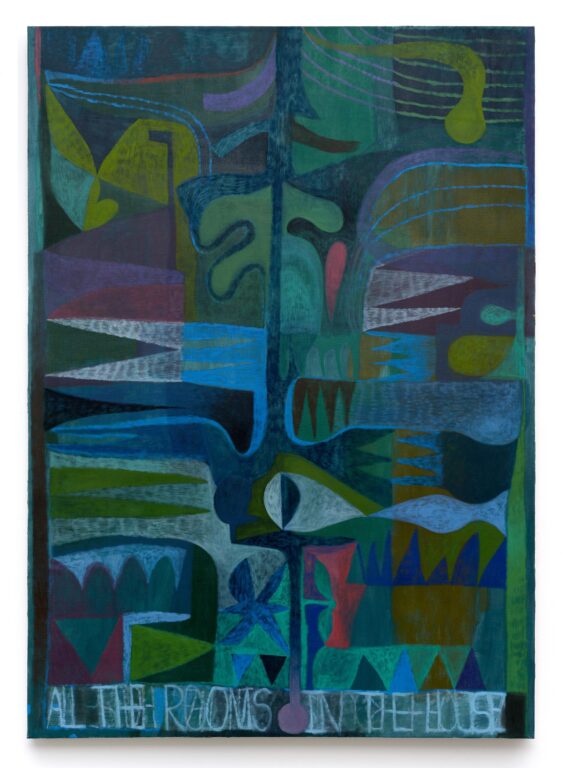
At times, the body disappears from view and returns as architecture. In All the Rooms in the House (2026) and Self Portrait as a House in Order (2026), the psyche is imagined as a structure with hidden chambers. A basement may hint at what stays below awareness. A cellar introduces concealment. The heart assumes a spatial dimension. These are anatomical, geometric paintings, but they resist perfect balance. Their slight misalignments matter. Ruznic sees this asymmetry as a desire to recalibrate her centre, especially when physical discomfort makes itself known. The composition tries to find order, while also admitting that alignment is never complete.
Speech forms a key axis of the exhibition. Glück’s poem invokes the infant Moses, who is offered gold and coal, then reaches for the ember and burns his mouth. Ruznic is interested less in the biblical frame than in the damaged voice that follows. This scene of interrupted utterance points back to Mutter, her 2024 solo show at Contemporary Fine Arts in Berlin, and to a recurring concern in her practice. The inability to speak is not absence. It reveals what language cannot carry. Beneath words lies a residue of failure, pressure, and stifled sound.
The Moses episode has a further resonance. Sent down the river to be saved, the child stands as a sign of survival amid displacement. Ruznic connects this passage to her own history as a refugee from Bosnia. Her diluted tableaux draw on childhood memories shaped by war, flight, and familial rupture, while refusing to remain only autobiographical. The pain at stake is larger than any individual account. At a moment marked by ongoing conflicts, these paintings register the instability of home and the fragile hope attached to rescue.
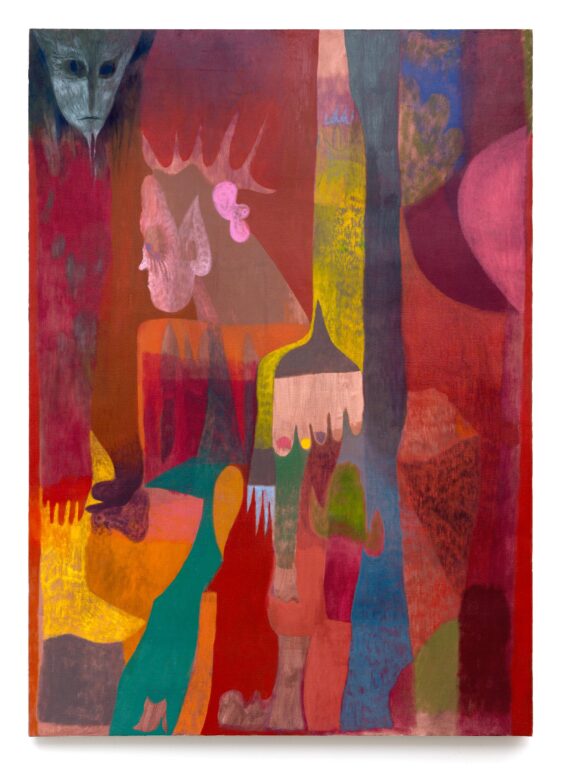
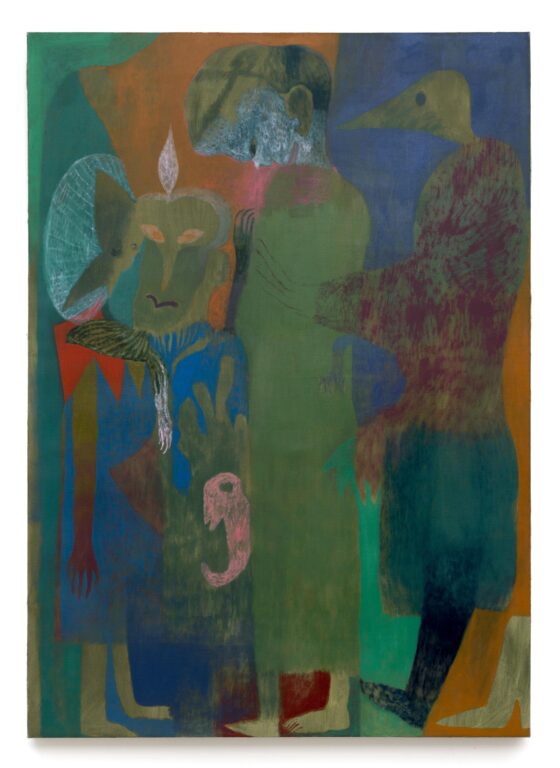
Ruznic’s images often feel spiritual without turning didactic. In Self Portrait as Memory (2026), an imposing figure appears to lean toward something beyond ordinary perception. A sacred aura hovers around it, without being reduced to doctrine. Personal narrative meets psychoanalysis. Mythology and esoteric thought pulse as animating energies rather than references to decode. The result is not symbolism in a narrow sense. This visual language gives the unseen real presence via colour and atmosphere.
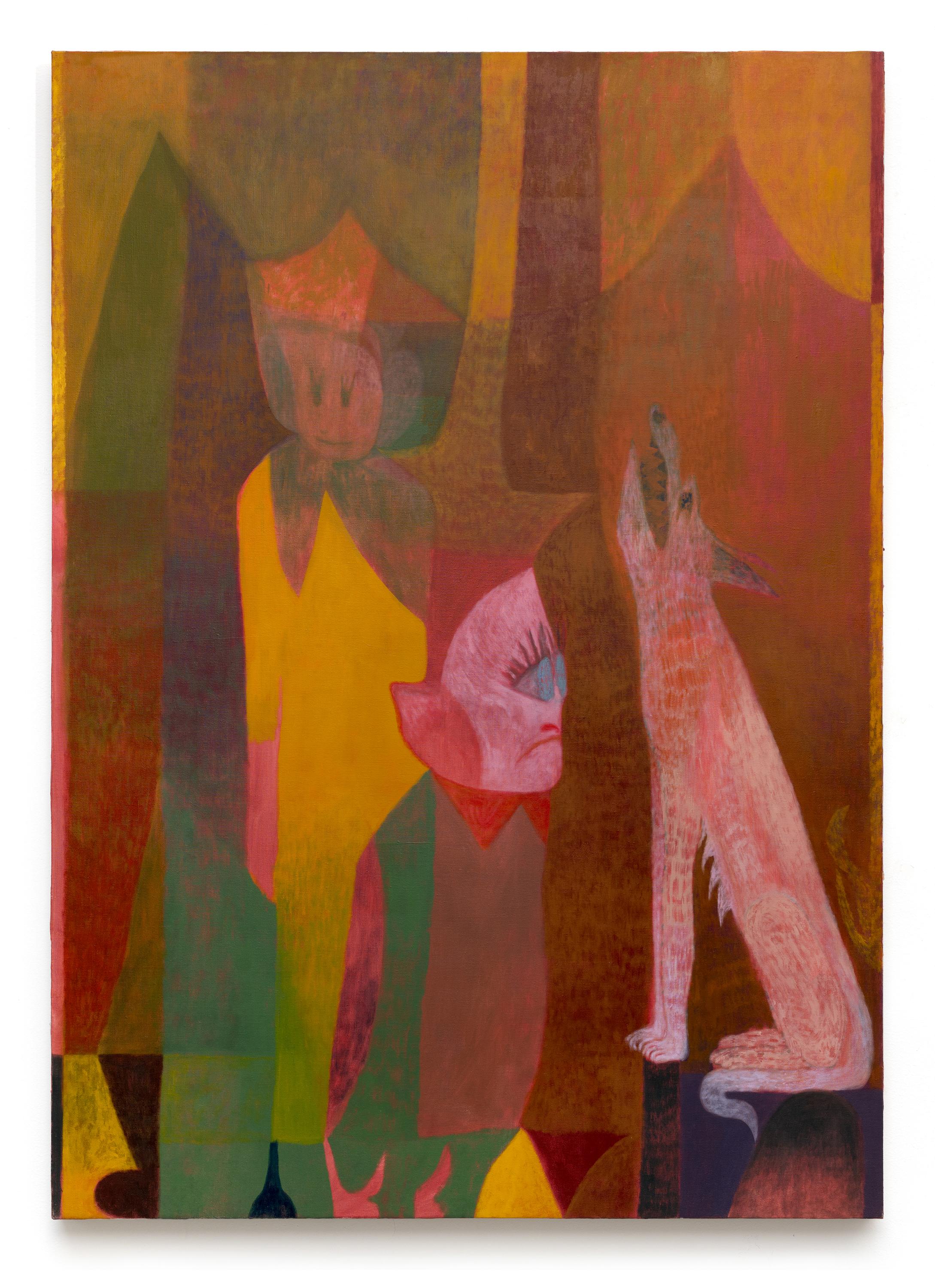
Ruznic shares an affinity with visionary artists such as Louise Bourgeois, Hilma af Klint, and Paul Klee, while preserving the specificity of her own vocabulary. Like them, she treats the visible world as a threshold. Her sensibility is rooted in embodied loss and in the strange grace that can emerge from devastation. Flowing brushwork and expressive chromatic fields suggest intimate history alongside collective wounds. In The Girl Who Swallowed the Wolf (2026), human and animal identities merge. It stages metamorphosis as both danger and protection, as if someone could survive only by absorbing what threatens them.
Across the exhibition, figuration and abstraction should be read together. Their dialogue charts a sequence in flux. Bodies shift into houses. Organs turn into rooms. Colour takes on heat. Line grows vocal. Nothing is final, because the psychic life described here stays in motion. Ruznic’s alchemical vessels sustain these transitions without resolving them too quickly.
Who Tastes Fire and Cannot Speak invites viewers into a space where light and darkness reverse their roles. Anatomy remembers what the tongue cannot say, and painting listens to what remains buried. In the Basel gallery, the works do not provide a single route through trauma or renewal. They create a charged environment as fragments gather and alter before us. The encounter guides us inward without sealing its meaning. Ruznic asks us to consider how images can hold what speech fails to contain, and how silence may become a source of knowledge.
Text by Nicolas Vamvouklis
Contemporary Fine Arts freut sich, mit Who Tastes Fire and Cannot Speak die erste Einzelausstellung der in Bosnien und Herzegowina geborenen und in New Mexico lebenden Künstlerin Maja Ruznic in der Basler Galerie zu präsentieren.
Ruznics für die Ausstellung entstandenen Ölgemälde bewegen sich zwischen Figuration und Abstraktion, ohne sich eindeutig einem der beiden Ansätze zu verpflichten. Konturen verschwimmen, als würden sie vom Nebel aufgelöst. Ein Kopf kann die Form eines Gefässes annehmen. Ein Raum kann einem Organ ähneln. Eine Silhouette scheint sich in der Farbe zu verflüchtigen, bevor sie sich vollständig offenbaren kann. Die Künstlerin arbeitet ohne ein vorgegebenes Konzept und lässt jede Leinwand sich im Prozess eigenständig entfalten. Im Laufe der Zeit fliessen ihre Lektüre und ihre Umgebung ins Atelier ein und verleihen jedem Werk eine bewusste und zugleich unruhige Spannung.
Der Ausstellungstitel nimmt Bezug auf das Gedicht Day Without Night von Louise Glück. Ruznic fühlte sich von der Umkehrung der Hölle in diesem Text angezogen: Statt Dunkelheit und Flammen beschreibt Glück eine Welt, die in unerbittliches Licht getaucht ist, in der Helligkeit zur Qual wird. Diese Inversion eröffnet der Künstlerin einen Raum, um über die Notwendigkeit von Schatten nachzudenken. In diesen Werken findet sich Frieden nicht allein in Klarheit, sondern in der Unschärfe, in mondbeschienenen Zonen, in denen Gedanken noch keine Worte gefunden haben und Gefühle sich noch nicht zu Gewissheiten verdichtet haben.
In den vergangenen Monaten hat sich Ruznic erneut der Aktiven Imagination – einer Praxis aus der Jung’schen Analyse – zugewandt sowie Edward Edingers Buch Anatomy of the Psyche: Alchemical Symbolism in Psychotherapy (1985). Darin beschreibt Edinger die Alchemie als die „Anatomie der Psyche“ und deutet die Suche nach dem Stein der Weisen als Prozess psychologischer Entwicklung. Ausgehend von diesem Gedanken versteht Ruznic die Malerei als einen Ort der Transformation. Die Leinwand fungiert als alchemistisches Gefäss, in dem rohe Impulse umgeformt werden und deren Reaktionen in der bemalten Oberfläche festgehalten werden.
Nacht und Mond stehen dem Tageslicht und dem Bewusstsein gegenüber, ohne dass sich dieser Kontrast zu einer einfachen Dichotomie verhärtet. Das Unterbewusstsein findet sich auf beiden Seiten. Bilder versengen und lösen sich auf, verdichten sich, erheben sich, verdunkeln sich und verbinden sich erneut. Edingers sieben Stufen (calcinatio, solutio, coagulatio, sublimatio, mortificatio, separatio und coniunctio) spiegeln sich in diesen Bewegungen wider, doch Ruznic illustriert sie nicht; sie folgt ihrem Rhythmus. Feuer verbrennt Verbundenheit, Wasser löst starre Muster, Erde verleiht der Einsicht Gewicht, Luft hebt den Instinkt in eine feinere Schwingung. Die psychische Substanz durchläuft diese elementaren Zyklen.
Diese Erforschung ist eng mit der viszeralen Erfahrung verbunden. Werke wie The Making of a Gallbladder (2026) und Mouth Mantra (2026) verorten Emotionen im Körper und legen nahe, dass Organe Erinnerungen ebenso beharrlich bewahren können wie der Verstand. Ruznic beschäftigt sich mit der traditionellen chinesischen Medizin, in der jedes Körperteil Teil eines grösseren Systems ist und einem bestimmten Affekt entspricht. Wut und Trauer sind hier nicht weit voneinander entfernt und die Angst besitzt ihre eigene Anziehungskraft. Sie scheinen im Gewebe und im Atem verankert zu sein. Die Malerei wird zur Aufarbeitung, nicht um dieses Terrain zu erklären, sondern um zu hören, was es bewahrt.
Der aus dem Blickfeld verschwundene Körper kehrt immer wieder als Architektur zurück. All the Rooms in the House (2026) und Self Portrait as a House in Order (2026) porträtieren die Psyche als Bau mit verborgenen Kammern. Ein Untergeschoss könnte andeuten, was sich unter dem Bewusstsein verbirgt. Ein Keller präsentiert das Verborgene und das Herz erhält eine räumliche Dimension. Es handelt sich um anatomische, geometrische Gemälde, die sich dennoch dem perfekten Gleichgewicht widersetzen. Diese leichten Verschiebungen sind bedeutsam: Für Ruznic verkörpert die Asymmetrie den Wunsch, das eigene Zentrum neu auszurichten, besonders dann, wenn sich körperliches Unbehagen bemerkbar macht. Die Komposition sucht Ordnung, gesteht sich jedoch ein, dass die Ausrichtung niemals vollendet ist.
Ein zentraler Aspekt der Ausstellung ist die Sprache. Glücks Gedicht erzählt, wie Gold und Kohle dem Säugling Moses angeboten werden, woraufhin er nach der Glut greift und sich den Mund verbrennt. Ruznic interessiert sich weniger für den biblischen Rahmen als für die beschädigte Stimme Moses. Diese Szene, in der Sprache abbricht, verweist zurück auf Mutter, ihre Einzelausstellung von 2024 bei Contemporary Fine Arts in Berlin, und auf ein wiederkehrendes Anliegen in ihrer Praxis. Die Unfähigkeit zu sprechen, versteht sich hier nicht als Abwesenheit; sie offenbart, was Sprache nicht tragen kann. Unter Worten liegt ein Überbleibsel von Versagen, Druck und ersticktem Laut.
Die Moses-Episode hat eine weitere Resonanz. Das Kind, das zur Rettung den Fluss hinuntergeschickt wurde, steht als Zeichen des Überlebens inmitten der Vertreibung. Ruznic verbindet diese Passage mit ihrer eigenen Geschichte als Geflüchtete aus Bosnien. Ihre verwaschenen Tableaus greifen auf Kindheitserinnerungen zurück, die von Krieg, Flucht und familiärem Zerbrechen geprägt sind, sich jedoch weigern, rein autobiografisch zu bleiben. Der Schmerz, um den es hier geht, übersteigt jede individuelle Erzählung. In einer Zeit anhaltender Konflikte dokumentieren diese Gemälde die Instabilität von Heimat und die fragile Hoffnung, die mit Befreiung verbunden ist.
Ruznics Bilder wirken oft spirituell, ohne didaktisch zu werden. In Self Portrait as Memory (2026) scheint sich eine imposante Gestalt zu etwas hin zu neigen, das jenseits herkömmlicher Wahrnehmung liegt. Eine sakrale Aura umgibt sie, ohne sich auf eine Doktrin festzulegen. Persönliche Erzählung trifft auf Psychoanalyse; Mythologie und esoterisches Denken pulsieren als belebende Energien, statt als zu entschlüsselnde Referenzen. Das Ergebnis ist kein Symbolismus im engeren Sinne. Diese Bildsprache verleiht dem Unsichtbaren durch Farbe und Atmosphäre reale Präsenz.
Ruznic teilt eine Affinität mit visionären Künstler:innen wie Louise Bourgeois, Hilma af Klint und Paul Klee, bewahrt jedoch ihr eigenes Vokabular. Wie diese Künstler:innen behandelt sie die sichtbare Welt als Schwelle. Ihre Sensibilität sitzt im verkörperten Verlust und in der seltsamen Anmut, die aus Verwüstung entstehen kann. Fliessende Pinselstriche und ausdrucksstarke Farbfelder suggerieren intime Erzählung neben kollektiven Wunden. Menschliche und tierische Identitäten verschmelzen in The Girl Who Swallowed the Wolf (2026). Das Werk inszeniert Metamorphose als Gefahr und Schutz zugleich, als wäre das Überleben nur möglich, indem man die Bedrohung in sich aufnimmt.
Figuration und Abstraktion sollten in der Ausstellung gemeinsam gelesen werden. Ihr Dialog macht einen Prozess des Wandels sichtbar. Körper verwandeln sich in Häuser, Organe werden zu Räumen. Die Farbe nimmt Wärme an, die Linie wird lauter. Das geistige Leben, das hier beschrieben wird, bleibt in Bewegung, nichts ist endgültig. Diese Übergänge werden in Ruznics alchemistischen Gefässe getragen, ohne vorschnell aufgelöst zu werden.
Who Tastes Fire and Cannot Speak eröffnet einen Raum, in dem Licht und Dunkelheit ihre Rollen vertauschen. Die Anatomie erinnert sich an das, was die Zunge nicht aussprechen kann, und die Malerei hört, was verborgen bleibt. In der Basler Galerie bieten die Werke keinen einzelnen Weg durch Trauma oder Erneuerung. Sie schaffen eine aufgeladene Umgebung, in der sich Fragmente vor unseren Augen sammeln und verwandeln. Diese Begegnung führt uns nach innen, ohne ihre Bedeutung zu verfestigen. Ruznic fordert uns auf, darüber nachzudenken, wie Bilder festhalten können, was Sprache nicht zu fassen vermag, und wie Stille zu einer Quelle des Wissens werden kann.
Text by Nicolas Vamvouklis